This Is Why Vientiane’s Hidden Architecture Will Steal Your Heart
You know that feeling when a city surprises you? Vientiane did exactly that to me. I went expecting quiet streets and temples, but what I found was a treasure trove of unique architecture—colonial shophouses, golden stupas, and modern designs blending with tradition. Traveling slowly let me truly see it. Each building told a story, and every alley held a new discovery. This isn’t just sightseeing—it’s connecting with a city’s soul. In a world where travel often means checking off landmarks, Vientiane teaches a different rhythm: one of quiet observation, deep appreciation, and architectural wonder hidden in plain sight. Here, beauty isn’t shouted—it’s whispered through weathered shutters, golden spires, and the soft hum of daily life within historic walls.
The Slow Travel Mindset in Vientiane
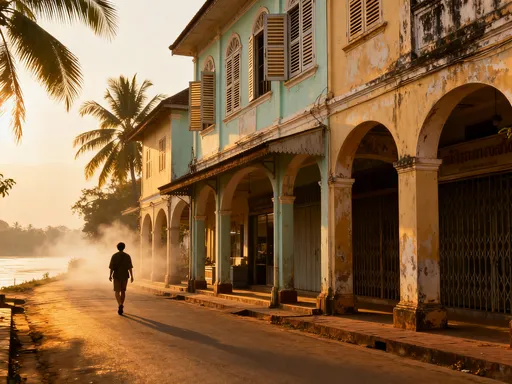
Slow travel is more than a trend—it’s a shift in perspective. It means choosing to linger, to walk instead of drive, to notice the details that flash by when you’re rushing from one attraction to the next. In Vientiane, this approach is not just rewarding; it’s essential. The city does not reveal itself quickly. Its charm unfolds gradually, like the morning mist rising from the Mekong River, softening the edges of buildings and casting golden light on centuries-old stonework. When you move slowly, you begin to see the texture of the city—the chipped paint on wooden doors, the intricate carvings above temple doorways, the way sunlight filters through louvered windows into quiet courtyards.
Most tourists spend a day or two in Vientiane, treating it as a stopover between northern Laos and Thailand. But those who stay longer discover a different pace of life, one where time feels more generous. Children play barefoot near weathered shophouses, elders sip coffee at sidewalk tables, and monks walk silently along tree-lined avenues in the early hours. These moments are not distractions from sightseeing—they are part of the architecture itself. The built environment in Vientiane is not separate from daily life; it is shaped by it, lived in, and loved. By slowing down, travelers gain access to a deeper understanding of how people interact with their surroundings, how history lives in the present, and how design serves both function and spirit.
There is a quiet wisdom in moving at the rhythm of the city. Rushing means missing the small things that make Vientiane unforgettable: the hand-carved balustrades on a temple staircase, the faded French signage on a colonial wall, the way a family arranges offerings at a roadside shrine. These details are not curated for visitors—they are real, ongoing expressions of culture. When you adopt the slow travel mindset, you stop being a spectator and become a witness. You begin to read the city like a book, page by page, with patience and curiosity. And what you find is not just architecture, but memory, resilience, and identity etched into stone, wood, and stucco.
French Colonial Echoes Along the Mekong
Vientiane’s architectural story begins in the early 20th century, when Laos was part of French Indochina. The French left behind more than administrative systems—they shaped the city’s physical form. Today, their legacy lingers in the graceful lines of colonial buildings that line avenues such as Samsenthai and Ketlathes. These structures, once homes to officials and centers of governance, now serve as government offices, boutique hotels, and cultural spaces. Their presence is subtle but enduring, a quiet dialogue between past and present.
The hallmark of French colonial architecture in Vientiane is its elegance and adaptation to the tropical climate. Buildings feature high ceilings to allow hot air to rise, wide verandas shaded by overhanging roofs, and louvered windows that catch the breeze while providing privacy. Pastel-colored facades—soft yellows, pale greens, and creamy whites—reflect the sunlight and give the city a gentle, serene quality. Many buildings are set back from the street, surrounded by lush gardens or shaded by tall trees, creating pockets of calm in the urban landscape. The arcaded shophouses, with their continuous covered walkways, offer relief from both sun and rain, a practical design that also fosters community by inviting pedestrians to stroll under shelter.
One of the best places to experience this architectural heritage is along the northern stretch of Samsenthai Avenue, where several well-preserved villas still stand. Though some show signs of age, many have been carefully restored, their wooden shutters repainted, their tiled roofs repaired. The Ministry of Foreign Affairs, housed in a former colonial residence, exemplifies this blend of historical preservation and modern use. Its symmetrical façade, central pediment, and double-height windows speak of European classicism, yet the building feels distinctly Lao in its integration with the landscape and climate.
Walking these streets, it’s easy to imagine Vientiane a century ago—slower, quieter, shaped by a different kind of order. But the colonial past is not romanticized here. These buildings are not museums; they are part of a living city. Some have been repurposed with sensitivity, their interiors updated while respecting original details. Others wait for restoration, their peeling paint and sagging roofs a reminder of the challenges of preservation. Yet even in their imperfection, they contribute to the city’s character. They are not relics frozen in time, but witnesses to change, standing quietly as Vientiane evolves.
Sacred Spaces: Where Spirituality Meets Design
If colonial architecture tells one chapter of Vientiane’s story, its temples tell a deeper, older one. Religious buildings in the city are not just places of worship—they are masterpieces of design, where art, symbolism, and faith converge. Each temple, or *wat*, follows traditional Lao Buddhist principles, emphasizing harmony, balance, and spiritual ascent. From the grand scale of Pha That Luang to the intimate courtyards of Wat Si Saket, these spaces invite contemplation as much as admiration.
Pha That Luang, the Great Stupa, is the most iconic. Standing at the city’s eastern edge, its golden spire rises over 45 meters, catching the light at every hour of the day. Built on the site of a 3rd-century structure, the current stupa dates to the 16th century and has been restored multiple times. Its design is profoundly symbolic: the square base represents the earth, the lotus-bud shape the purity of enlightenment, and the umbrella-like crown the infinite. Every element, from the guardian lions at the entrance to the intricate stucco reliefs depicting scenes from the Buddha’s life, is intentional. The temple complex is laid out in perfect symmetry, guiding visitors on a physical and spiritual journey toward the center.
Wat Si Saket offers a different experience. Built in the early 19th century, it is Vientiane’s oldest surviving temple and home to over 6,000 Buddha images. The main hall is surrounded by a cloister lined with niches, each holding a small seated Buddha. Some are cast in bronze, others carved from stone or molded from stucco, their styles varying across centuries and regions. The effect is meditative—the repetition of form, the quiet light filtering through high windows, the soft echoes of footsteps on stone. The temple’s roof, with its sweeping tiers and delicate finials, follows the classic Lao *salak* style, designed to resemble the feathers of the mythical *kinnari* bird, symbolizing grace and protection.
Wat Si Muang, though smaller, holds deep significance for locals. It is believed to house a sacred pillar, or *lak muang*, that protects the city. The temple’s main hall is modest, but its roof soars in elegant curves, adorned with gold leaf and colorful mosaics. Devotees tie sacred threads around the pillar, offer lotus buds, and light incense in quiet prayer. The architecture here is not about grandeur but intimacy—designed to draw people close to the divine. These temples, in all their variety, reflect a design philosophy rooted in mindfulness. They are not meant to impress from a distance, but to transform those who enter.
Hidden Courtyards and Local Living
Beyond the main roads and tourist sites, Vientiane’s residential neighborhoods reveal another layer of architectural beauty. In areas like Ban Naxone and Ban Sikhottabong, traditional Lao homes still stand, blending function, climate adaptation, and cultural values. These houses are rarely featured in guidebooks, yet they offer some of the most authentic glimpses into Lao life. Built on stilts, with wooden frames and thatched or corrugated metal roofs, they are designed for ventilation, flood protection, and family living.
The stilt house is more than a style—it’s a response to the environment. Elevated floors keep homes dry during the rainy season and allow air to circulate beneath, cooling the interior. Open sides or large windows encourage cross-ventilation, while wide eaves shield walls from heavy rains. Many homes have open-air kitchens at the back, where families cook over charcoal stoves, the scent of lemongrass and chili drifting through the neighborhood. At the front, a small altar or spirit house may sit under a tree, adorned with flowers and incense, a quiet acknowledgment of the unseen world.
Walking through these neighborhoods, especially in the early morning or late afternoon, feels like stepping into the rhythm of daily life. Women sweep their门前, children chase each other between houses, and elders sit in hammocks, watching the world go by. The architecture here is unpretentious but thoughtful. Homes are often arranged around shared courtyards, fostering a sense of community. Privacy is maintained through layout rather than high walls—rooms are positioned to face inward, creating intimate spaces shielded from the street.
Some homes incorporate modern materials—concrete pillars, metal roofing—but still follow traditional layouts. This blend of old and new reflects a deeper truth: Lao culture is not frozen in time. It adapts, evolves, and finds balance. For the slow traveler, these neighborhoods are a gift. They offer no grand monuments, no ticketed entries, but something more valuable—authenticity. By respecting local privacy and moving quietly, visitors can witness a way of life where architecture is not just shelter, but a reflection of values: simplicity, resilience, and harmony with nature.
Modern Vientiane: Tradition Reimagined
Vientiane is changing. New buildings rise alongside old, and the city’s architectural identity is being redefined. Yet unlike some Southeast Asian capitals that embrace glass towers and globalized design, Vientiane’s modern architecture often pays homage to its heritage. Government buildings, cultural centers, and boutique hotels are increasingly incorporating traditional Lao elements—tiered roofs, wooden latticework, and symbolic motifs—into contemporary forms. This is not pastiche, but a thoughtful dialogue between past and future.
One striking example is the Lao National Cultural Hall, a modern structure that echoes the form of a traditional temple. Its roof rises in layered tiers, covered in green tiles, while the façade features carved wooden panels depicting Lao legends. Inside, the space is open and flexible, designed for performances and exhibitions. The building does not imitate the past; it interprets it, using modern materials and techniques to express cultural identity. Similarly, several new hotels in the city blend bamboo, concrete, and glass to create spaces that feel both luxurious and grounded in place. Courtyards, water features, and natural light are central to their design, reflecting Lao aesthetics of balance and tranquility.
This trend toward culturally sensitive modern design is not accidental. Architects and planners in Laos are increasingly aware of the need to preserve identity in the face of development. International influences are welcome, but not at the cost of erasing local character. In residential areas, new homes often include traditional features like raised floors or spirit houses, even when built with concrete and steel. This continuity is a quiet act of resistance against homogenization—a way of saying that progress does not require forgetting.
For travelers, this architectural evolution adds depth to the experience. It shows a city that honors its roots while moving forward. Walking through Vientiane, you can see this balance in small details: a modern café with a roof shaped like a temple spire, a government office with louvered windows inspired by colonial design, a private home with a traditional altar beneath a solar panel. These are not contradictions—they are conversations. And they suggest that Vientiane’s future, like its past, will be shaped by a deep respect for place, memory, and meaning.
Practical Tips for an Architectural Journey
Exploring Vientiane’s architecture is best done on foot, with time and intention. The city is compact and walkable, but the heat and humidity mean timing matters. Early morning, between 6:00 and 8:30 a.m., is ideal. The light is soft, the streets are quiet, and the air is cool. This is when the city feels most alive in its daily rituals—monks on alms rounds, vendors setting up market stalls, families beginning their day. Late afternoon, from 4:00 to 6:00 p.m., offers another golden window, with long shadows and warm light that enhances the textures of stucco, wood, and stone.
A recommended route begins at Patuxai, the city’s ornate victory monument, often called the “Arc de Triomphe of the East.” From there, walk east along Lane Xang Avenue, observing the mix of colonial and modern buildings. Turn south onto Samsenthai Avenue, where colonial villas line the street. Continue to Wat Si Saket, then head toward the Mekong River, where you can walk the scenic waterfront path and see Pha That Luang in the distance. This route covers a range of architectural styles and allows for frequent stops at cafés or shaded benches.
When photographing, practice respect. Always ask permission before entering private homes or photographing people. Avoid using flash inside temples, and never point your feet toward Buddha images—a sign of disrespect in Lao culture. Instead of rushing to capture the perfect shot, take time to observe. Sit on a bench, watch the light change, listen to the sounds of the city. The most meaningful experiences often come not from what you photograph, but what you feel.
Consider hiring a local guide, especially one with knowledge of architecture or history. Many are trained through community tourism programs and offer insights that go beyond guidebooks. They can explain construction techniques, share stories about neighborhoods, and help you navigate respectfully. Their presence transforms a walk into a conversation, deepening your connection to the city. Above all, move slowly. Let curiosity guide you down side streets, into courtyards, and through open temple gates. The most memorable discoveries are often unplanned.
Why Architecture Tells the Real Story of Laos
Buildings do not lie. They bear the marks of time, conflict, adaptation, and hope. In Vientiane, every structure—from the grandeur of Pha That Luang to the simplicity of a stilt house—carries a piece of the nation’s story. The French colonial buildings speak of a complex past, not of conquest alone, but of cultural exchange and resilience. The temples stand as testaments to faith and continuity, surviving wars and upheavals. The modern structures reflect a quiet confidence—a belief that Laos can embrace the future without losing itself.
Architecture is memory made visible. It records what people valued, how they lived, and what they endured. In a country with a history shaped by external influences and internal strength, buildings become silent storytellers. They do not need to be grand to be meaningful. A weathered door, a hand-carved beam, a spirit house with fresh flowers—each is a gesture of care, a link to tradition, a quiet act of identity.
For the traveler, engaging with architecture is a way to move beyond surface-level tourism. It invites empathy, curiosity, and reflection. When you look closely at a building, you are not just seeing walls and roofs—you are encountering the choices, beliefs, and lives of those who built and lived within them. In Vientiane, this connection is especially profound. The city does not dazzle with excess; it reveals itself gradually, to those willing to look.
Ultimately, travel is not about how many places you see, but how deeply you see them. Vientiane teaches that lesson beautifully. Its architecture, hidden in plain sight, asks only that you slow down, pay attention, and listen. And in that stillness, you may find not just the soul of a city, but a deeper understanding of what it means to belong to a place, to build a life, and to leave something lasting behind. That is the quiet power of Vientiane’s hidden architecture—and why it will steal your heart, one detail at a time.